Fashion for the Earth
Global Threads: How Textiles Shape Economies Worldwide
September 12, 2025
On a warm, sunny day, a group of teenage girls stroll through the mall, shopping bags swinging by their sides and beaming with pride for every dollar spent on their newest fast fashion fads. Two years later, across the globe, a young girl from Kenya will find one of those items at a Mitumba market.
Though they live in completely different worlds, both girls are connected by a single garment — a Brandy Melville tank top that becomes a microcosm of the global textile industry, exposing the deep contrasts between privilege and precarity, desire and discard.
But how did this garment cycle across the globe and what are the economic ramifications of its journey?
Fast fashion garments will only interest the consumer for a few seasons, if that. Since the mid-2000s, the average Global North shopper has come to consume twice as many garments as the average global consumer. This surge in fast fashion consumption has turned countries like Ghana into involuntary dumping grounds for discarded clothing.
Each week, Ghana imports around 15 million garments of secondhand clothing, items locally referred to as obroni wawu or “dead white man’s clothes.” These garments are economic remnants of the vast overproduction of the fashion industry, shipped to the Global South under the guise of donation or reuse. But while some of these clothes are resold, many are too damaged to wear, contributing to overflowing landfills, strained local economies and disrupted domestic textile industries.
A Double-Edged Sword
Due to the declining quality of clothing, much of the apparel sent abroad ultimately ends up in landfills. This creates a harmful cycle.
An estimated 85% of all clothing is either incinerated or discarded in landfills. Although consumers often donate clothing to thrift stores with good intentions, only about 15% of all garments are actually recycled – either sold wholesale on lower markets, downcycled, or exported. Estimates as high as 45% of donated clothing is sent to foreign countries, much of it ending up in Sub-Saharan Africa.
Once there, about 20-50% of garments will end up in open-air landfills, where they release gases and chemical leachates during decomposition, polluting the air, soil, and groundwater. These pollutants also pose serious health risks to nearby communities. To worsen matters, discarded clothing frequently clogs drainage systems, blocking water flow and exacerbating flooding — especially in subtropical and tropical regions that already face frequent flood events.
Yet secondhand clothing (SHC) sectors still offer critical benefits. In developing countries, SHC provides affordable clothing and reduces the demand for locally produced garments, conserving water, energy, and other resources. In Kenya, for instance, 91.5% of households purchase and rely on secondhand clothing. This reuse contributes to circular economic practices, extending the life cycle of garments while limiting textile waste.
The SHC import business is also an economic driver. In Kenya alone, the business generates around $107 million annually in tax revenue. A study by Humana People to People showed that each ton of second-hand imported clothing sustains approximately 6.5 jobs, and in Kenya 2,000,000 citizens are involved in 2nd hand trade.
While there are some benefits, a full assessment reveals a harsh reality — one marked by a default on development, rising health risks, and environmental neglect, all of which define the future of global stability.
Cha-Ching?
While SHC imports may generate some employment, this work is often less valuable than the opportunities lost through the collapse of domestic textile industries. In 1980, Kenya’s textile sector employed around 500,000 people. Today, that number has fallen to just over 20,000, largely due to the overwhelming influx of imported second hand clothing that makes it nearly impossible for local manufactures to compete.
As these clothes continue to flood in, efforts to build domestic textile industries are undermined. Countries that accept SHC are left with weakened industrial capacity, limited development of human skills, and a global identity as mere dumping grounds for the Global North’s castoffs.
In 2018, East African nations attempted to shift away from dependence on imports by focusing on local manufacturing. Rwanda, Kenya, Uganda, Tanzania, South Sudan, and Burundi increased import tariffs on secondhand clothing to stimulate domestic production. However, this move was met with retaliation from the United States. The Office of the U.S Trade Representative threatened to remove four of the six countries from the African Growth and Opportunity Act, a trade agreement intended to promote trade and economic growth across the continent. Under this pressure, all but Rwanda backed down. Rwanda held firm on the ban, prioritizing long-term economic sovereignty over short-term trade benefits.
Sick in Style
Of all the clothing sent from the Global North, only about 1 in 3 pieces are actually usable. In Kenya 2021, about 458 million used clothing items were immediate waste, and 307 million of these garments were made from plastic-based fibers. The waste is known to overflow into the Nairobi River – often from nearby landfills or markets.
In other cases it is either burned in landfills or used as fuel in local markets. In Cambodia, textile waste is used as a fuel to fire kilns in brick factories. As with all locations where textile waste is burned, this toxic practice releases toxic fumes into the atmosphere leading to dire health consequences. The result? People, and especially children, are plagued with many health issues such as asthma, skin infections, diarrhea, lung infections, and cardiovascular disease.
The large proportion of organic textile waste, combined with ideal conditions for anaerobic decomposition leads to significant methane generation, and thus spontaneous fires. Meanwhile, 69% of SHC clothing consists of synthetic textiles. These do not biodegrade in landfills and when they are incinerated, the emissions will contain many toxic elements that can lead to cancer, birth defects and lung diseases among other serious health problems.
When clothing waste infiltrates fresh waters or oceans, they can affect livelihoods through their pollution. An example is Ghana’s Korle Lagoon, once a thriving freshwater ecosystem supporting a fishing industry and used for recreation, now ranks as one of the most polluted bodies of water on earth. The now blackened water, flows into the coastal water off Ghana where it affects the livelihood of the fishers who find textile waste clogged in their nets. Nearby communities are also affected, as the polluted water they rely on for drinking, bathing, irrigation, and livestock is polluted.
Contaminated water sources are both environmental catastrophes and economic lifelines. Soil and water contamination from textile dumping contributes to soil degradation. The leached chemicals disrupt natural processes impairing soil fertility affecting plant life. Moreover, the microplastics shed from these materials during use and their persistence in landfills pose a long-term threat to soil health, altering its physical and chemical properties and impacting microbial communities. This can potentially reduce crop yields, destabilizing agricultural economies that entire communities depend on.
Clothing waste pollutes at the end of its life cycle, just as it does at the beginning. For example, Indonesia’s Citarum River, used by over 15 million people, hosts textile factories that discharge chemicals above international safety standards. These toxins have declined 60% of rice and fish yields, cutting off foundational revenue sources.
In Lesotho and Tanzania, rivers once used for drinking, bathing, and irrigation are now toxic, with water pH levels as high as bleach. The result is a widespread decline in health and productivity, as communities face medical burdens and economic hardship from tainted ecosystems they can no longer rely on.
What starts as a consumer choice in developed nations begins and ends as a crisis of health, hunger, and lost income in developing regions.
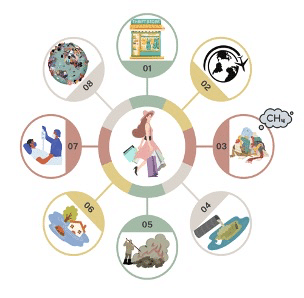
Waste Fashion Colonialism
Africa has become a dumping ground, one shaped largely by the economic gap between its population and wealthier industrialized nations. Even in textile waste, the imbalance is sharp: people with higher incomes generate, on average, 76% more clothing waste than those from lower-income communities. This reflects a center-periphery dynamic, a structure where developed nations (center) benefit from the less developed nations’ (periphery) resources, while limiting their development, keeping peripheral nations dependent and underdeveloped. This theory is seen through the Global North offloading its excess onto the Global South.
In African countries, buying new clothes is a luxury that most people cannot afford. Yet the promise of Western fashion creates a trap, preventing a local textile industry while leading to the destruction of waterways, increasing health risks, and growing dependency, all in pursuit of access to “Western privilege”.
Western Nations ship their used clothing to Africa even though the region lacks the infrastructure to handle the huge volume of waste. But in doing so, they avoid the environmental consequences and legal responsibilities of handling it at home, offloading not just clothes, but the pollution, toxins, and long-term damage that come with them.
There is a deeper meaning behind the economics of global waste — one that reflects the unhealthy relationship between consumption and global well-being. At its core is a culture of disconnection: a lack of care for what sustains us — our environment, communities, and the labor behind our resources. The detachment from both the origins and consequences of our choices is unsustainable and the driver of the health and environmental crises we see today. The cycle of overconsumption, disregard, and displacement of waste clothing, creates a ripple effect that burdens the most vulnerable while protecting those most responsible.
So, the next time you’re strolling the mall, ready to purchase a new skirt or top or dress, ask yourself: Is it really worth it?
This article is available for republishing on your website, newsletter, magazine, newspaper, or blog. Please ensure that the author’s name and their affiliation with EARTHDAY.ORG are credited. Kindly inform us if you republish so we can acknowledge, tag, or repost your content. You may notify us via email at [email protected] or [email protected]. Want more articles? Follow us on substack.