Climate Action
Climate Action Belongs to Everyone: A Conversation with COP31 Climate Champion Samed Ağırbaş
April 16, 2026
As the world builds toward COP31 in Türkiye, the stakes for meaningful climate action have never been higher. We sat down with Samed Ağırbaş, the UN Climate High-Level Champion for COP31, to talk about what it will take to turn pledges into progress, why climate education matters, and how a just transition can deliver opportunity for all.
Strategic Vision and Key Objectives for COP31
Rodolfo “Ropo” Beltrán, Regional Director for Brazil & Latin America, EARTHDAY.ORG
As the Climate High-Level Champion for COP31, your role is to help mobilize cities, businesses, financial institutions, civil society and other partners to accelerate climate delivery and ensure that commitments translate into measurable action. What are your main priorities as we approach COP31?
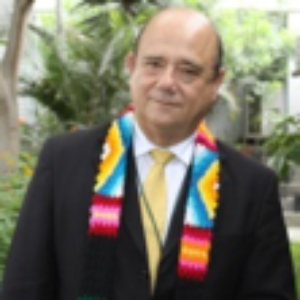
Samed Ağırbaş, UN Climate High-Level Champion for COP31
One of my key objectives for COP31 is to build on the momentum of recent COPs. COP28 focused on the transition away from fossil fuels. COP29 advanced critical climate finance negotiations. COP30 in Belém reinforced the importance of implementation, translating Nationally Determined Contributions into measurable action. The direction is already clear. My goal is to catalyse delivery and scale up action to meet the targets of the Paris Agreement.
I also want to bring together stakeholders across regions and sectors with a focus on scaling practical climate solutions. That means lowering barriers for vulnerable communities, youth, Indigenous Peoples and faith actors so they can participate meaningfully through dialogues and collaborative platforms.
Another priority is making climate discourse more relatable. Climate action cannot remain confined to boardrooms or policy circles. It must reach into our homes, communities, classrooms and workplaces.
People do not experience climate change as a 1.5-degree temperature target. They experience it through hunger, droughts, floods, heatwaves, failed harvests, rising food prices and growing waste. Addressing these interconnected realities makes climate action both relatable and deliverable.
Finally, there is the matter of delivery and complementarity. The world is currently off track in meeting the goals of the Paris Agreement. COP31 is a crucial moment to bridge the implementation gap before 2030. Türkiye’s position at the crossroads of North and South, East and West, gives it a unique opportunity to help foster a more inclusive and result-oriented process.
The Role of Climate Education in Strengthening Long-Term Climate Ambition
RB: Climate education is increasingly recognized as a critical pillar for long-term climate ambition. How do you see the role of education in accelerating climate action globally?
SA: Environmental education is fundamental to building a climate-conscious society. It equips people with the knowledge, skills and values needed to understand the environmental challenges we face and take meaningful action. Achieving this requires partnerships across formal and non-formal education systems, governments, civil society, the private sector and local communities. It means recognizing the value of traditional and Indigenous knowledge, which has long guided sustainable relationships with nature.
Young people have a particularly important role to play. They are already shaping public conversations on climate and sustainability, and many are driving change within businesses, institutions and communities. Strengthening intergenerational dialogue is essential. When young people engage with policymakers and financial institutions, they become powerful drivers of ambition and accountability.
At the same time, the numbers reveal a serious gap. Research by UNESCO shows that more than half of national education curricula make no reference to climate change, and only a small proportion address biodiversity. Many teachers also report lacking the training needed to teach climate-related subjects effectively.
Climate education must therefore extend beyond classrooms and support lifelong learning, including the development of green skills for those already in the workforce.
Preparing societies for a just transition means ensuring that people of all ages, professions and backgrounds can participate in building a sustainable future.
Climate Action as a Driver of Economic Opportunity and Green Jobs
RB: Climate action is often described not only as an environmental necessity but also as an economic opportunity. How do you see the relationship between climate action and economic development?
SA: Climate action presents one of the greatest economic opportunities of our time. Countries that invest in strong climate strategies are positioning themselves for more resilient economies, greater energy security and leadership in emerging industries. These investments are already creating jobs, attracting capital, improving public health and reducing vulnerability to global energy shocks.
The transformation is underway. Renewable energy technologies like solar and wind are now often cheaper than fossil fuel alternatives, and the clean energy sector already employs more than half of the global energy workforce. With the right policies, millions of additional jobs can be created in renewable energy, energy efficiency, sustainable transport and climate-smart infrastructure.
Cities will play a particularly important role, expanding clean public transport, improving waste management, restoring green spaces and investing in energy-efficient buildings can create jobs while reducing emissions and improving urban life.
Ultimately, climate action can deliver stronger economies, healthier societies and greater long-term stability. But for this to be realized, climate policies must also support adaptation and resilience, protect vulnerable communities, and involve businesses, cities and other non-state actors so that solutions are both investable and implementable at scale.
The Importance of Civil Society and International Collaboration
RB: Civil society organizations and international partnerships play an essential role in delivering climate action. How can these collaborations help accelerate financing and implementation?
SA: Many of the solutions to climate change already exist. What is often missing is the scale of financing needed to implement them. My role as Climate High-Level Champion is to help bring partners together so that investment flows to where it can make the greatest difference. Finance is ultimately the bridge between pledges and real-world change.
At COP29, Parties agreed to scale up support for developing countries to at least $300 billion annually by 2035. They also called on all actors to work together to mobilize USD 1.3 trillion per year in climate finance by 2035. The Baku to Belém Roadmap provides a pathway to help achieve that scale.
Collaboration is essential in this context. Governments set direction through policy and regulation, but implementation at scale depends on businesses, cities, civil society, financial institutions and communities. Civil society builds trust, accountability and public support, while the private sector brings innovation, investment and operational capacity.
Climate action must move from isolated projects to solutions that scale. Through stronger collaboration between governments, civil society, investors and businesses, we can turn climate ambition into measurable outcomes that leave a lasting legacy beyond COP31.
A Final Message: The Importance of a Just Transition
RB: Is there any final message you would like to share as the world prepares for COP31?
SA: The message I want to emphasize is the importance of a just transition. Climate action needs to move quickly but it must also be fair and inclusive. If the transition leaves people behind, it will not be sustainable in the long term.
A just transition means ensuring that workers, communities and countries benefit from climate solutions as economies change. Climate action should create new jobs, strengthen local economies and open opportunities, rather than create fear or uncertainty for people whose livelihoods depend on existing systems.
This responsibility is shared, but it is not equal. Developed countries, given their historical emissions and financial capacity, have a greater role to play in supporting a fair transition. That means meeting climate finance commitments, strengthening support for loss and damage, and lowering the cost of capital for sustainable infrastructure in developing countries.
For me, a just transition is ultimately about building systems where vulnerable communities have access to training, new skills and real support to move into cleaner, more resilient livelihoods. If done well, the transition to a low-carbon future will not only reduce emissions. It will reduce inequality, strengthen resilience and create more stable, prosperous societies for everyone.
This interview was conducted by Rodolfo “Ropo” Beltrán, Regional Director for Brazil & Latin America at EARTHDAY.ORG. It has been edited and condensed for clarity.