Canopy Tree Project
Meet Nature’s Super Star Trees
November 14, 2025
With towering branches that reach for the sky and sprawling canopies of vibrant green, trees are not just beautiful — they are the lungs, the backbone, and the very life force of our planet. The Earth’s survival depends on them; their existence is non‑negotiable.
They are crucial for the air we breathe, releasing oxygen through photosynthesis while absorbing carbon dioxide and water, using sunlight to produce life-sustaining nutrients. But not all trees are the same, here are 5 trees that defy the average expectations of what a tree can do.
1. The Tree of Life
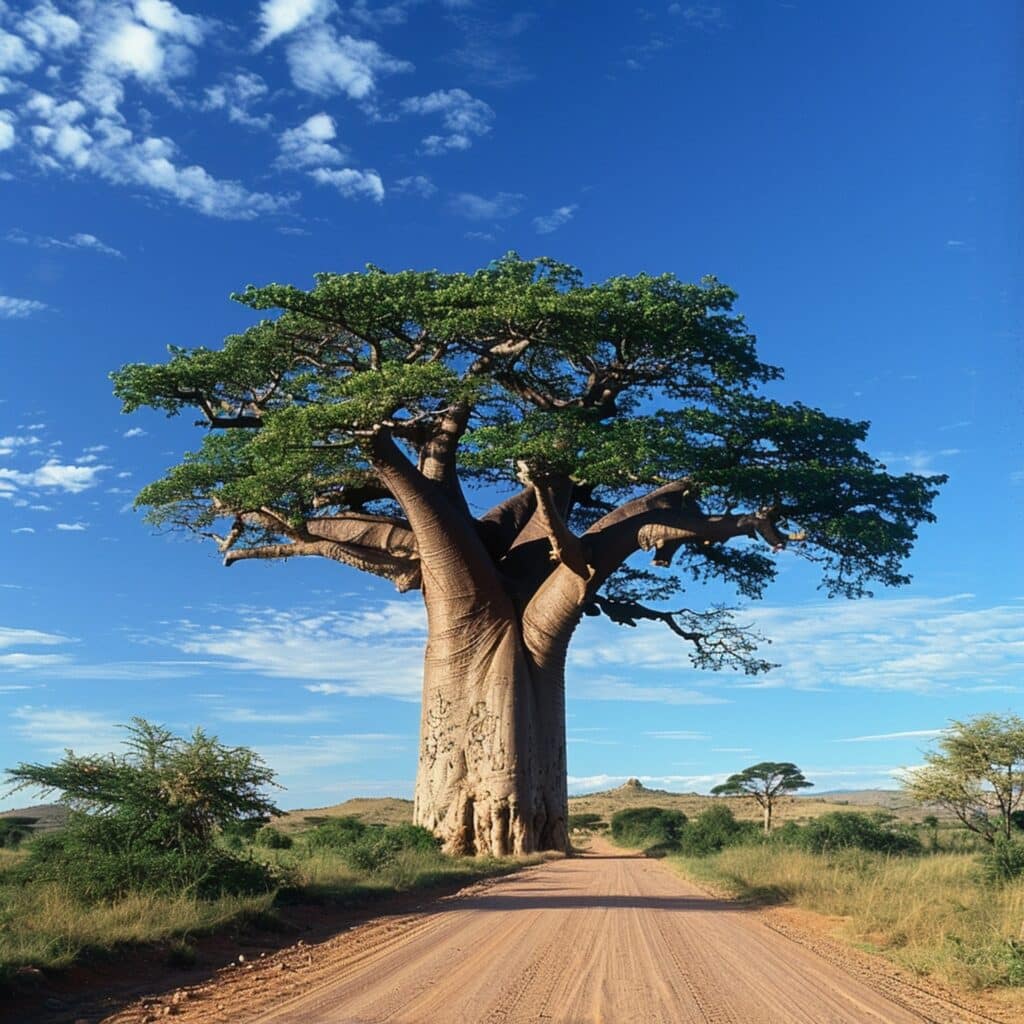
The Baobab’s nickname is the “Tree of Life” is fitting. Not only is the Baobab unique in its ability to survive in dry environments, it has many other unique qualities and features that enable it to support communities in the region.
Native to Africa, it is most often found growing in a strip of land ranging across Senegal to Sudan. These trees can live to be 2,500 years old, and they act as a canopy for shade and a reservoir for water.
The Baobab boasts fire-resistant bark and can regenerate damaged sections to survive wild fires, while also providing wildlife and humans with water and nourishing fruit. A large Baobab tree is capable of storing up to 32,000 gallons of water. The fruit of the Baobab contains high amounts of vitamin C, calcium, potassium, magnesium, iron, antioxidants, and fiber.
Also, their leaves are rich in iron and can be eaten like spinach, while their seeds can be roasted and used to make a drink similar to coffee or pressed to make oil. Plus, the roots, bark, and leaf extract also have antiviral and antibacterial properties, which local communities use to treat malaria and fever. Aside from all these nutritional and medicinal purposes, the inner bark can also be used for fiber when making ropes. It really is a one stop shop tree for human needs!
2. The Titan of Trees
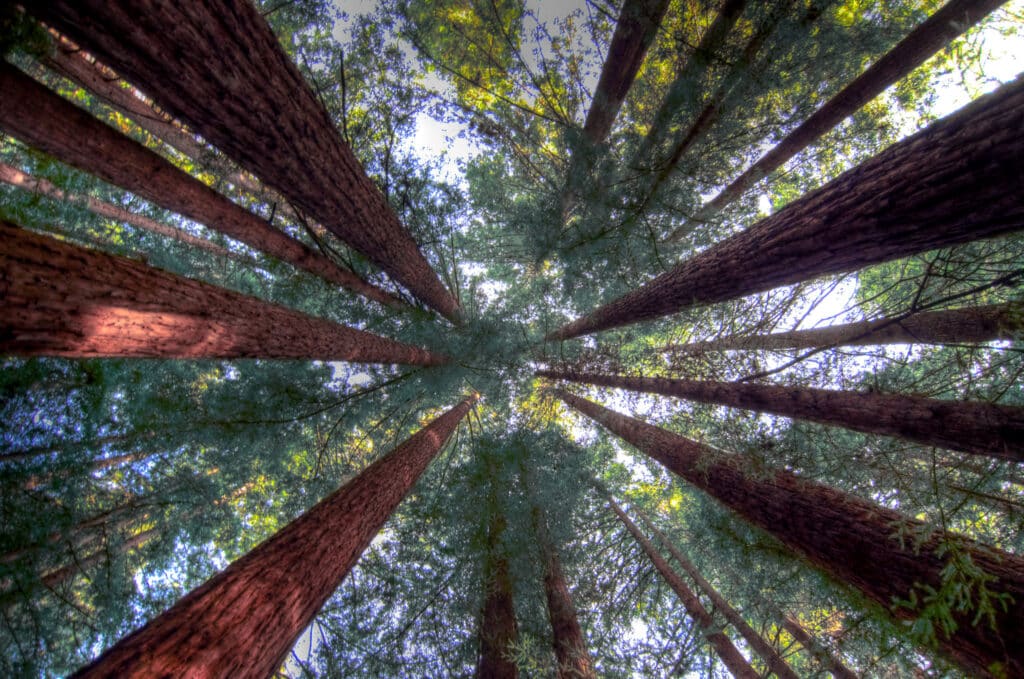
Standing at 380 feet tall is a tree in California’s Redwood National Park is a very special tree, named Hyperion. ‘He’ is certified by the Guinness World Records as the tallest living tree in the world, a coastal redwood located deep in the park, with no trails leading to it.
For reference, Hyperion’s height makes it 1.25 times bigger than the Statue of Liberty in New York City. Initially discovered in 2006, Hyperion’s namesake is a Titan in Greek Mythology.
Other tall trees located in the Redwood National Park are Helios, who is 377 feet tall, and Icarus, who is 371 feet tall. The mild temperatures and foggy weather of Northern California serve as an ideal climate for redwoods to absorb moisture through the air and it is these perfect conditions which allow for their extraordinary height.
While the Redwood National Park is open to the public, visiting Hyperion is not. In fact, individuals who attempt to hike through unmarked paths to get to this magical tree can be fined up to $5,000, and face 6 months in jail.
3. Colors of the Forest
Trees are often considered to be the most colorful in the autumn in certain regions of the world, when their leaves turn vibrant shades of orange, yellow, and red before shedding during the winter. However, one tree is vibrant all year long, and not because of its leaves.
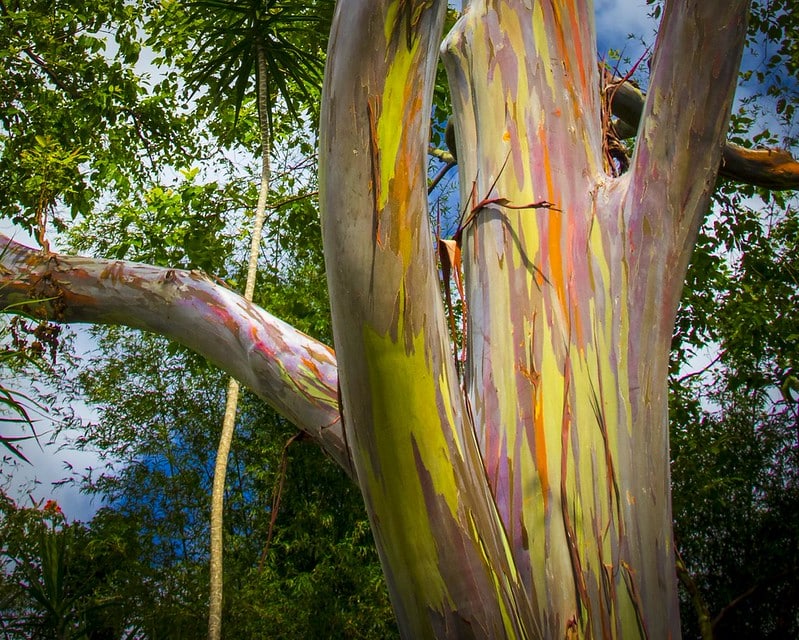
The Rainbow Eucalyptus tree is a unique species whose bark turns shades of green, blue, purple, orange, and red as it sheds. Native to the rainforests of the Philippines, New Guinea, and Indonesia, the Rainbow Eucalyptus’ colorful bark can be attributed to the presence of chlorophyll and tannins in its trunk.
Chlorophyll drives photosynthesis and is also the pigment that gives plants their green color.
Tannins are chemical substances that can be found in tree bark, which are often yellow or brown in color. As the bark of the Rainbow Eucalyptus peels back, it starts out as green. However, as the chlorophyll breaks down and tannins build up, the bark changes into various colors before it eventually becomes brown.
Because of its unique and vibrant colors, the Rainbow Eucalyptus can be used as a decorative tree. Ironically enough, though, it serves a commercial purpose as it is harvested to produce white paper.
4. A Living Fossil
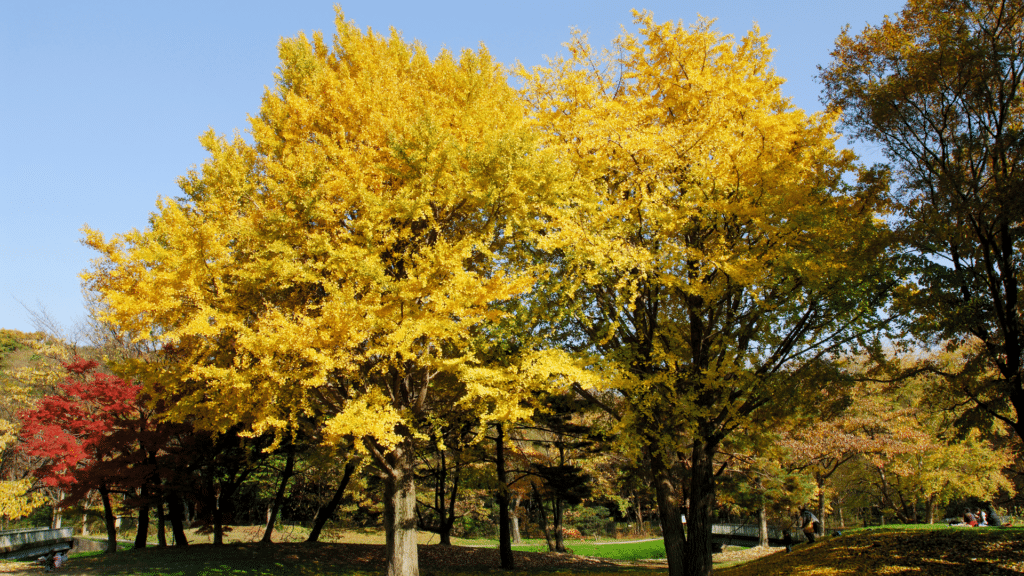
Animals like horseshoe crabs are considered “living fossils,” a term coined by Charles Darwin in his seminal 1859 work On the Origin of Species. He used it to describe species that have remained virtually unchanged in appearance from their fossilized ancestors that lived millions of years ago. Similarly, the ginkgo tree is regarded as a living fossil — the last surviving member of a family of plants that once thrived alongside the dinosaurs.
Native to China, the ginkgo tree now grows across East Asia, including Korea, and was introduced to the United States in 1784. The Ginkgo has stayed genetically the same for more than 180 million years. In fact, there is a Ginkgo Petrified Forest State Park in Washington State with 15 million year old fossilized Ginkgo logs.
Not only have Ginkgo trees existed on the planet for a very long time, individual trees can have incredibly long life spans. The largest ginkgo in the world, discovered outside of the Guizhou Province in China, has a trunk diameter of over 15 feet, and is estimated to be at least 4 thousand years old.
5. Nature’s Hidden Danger
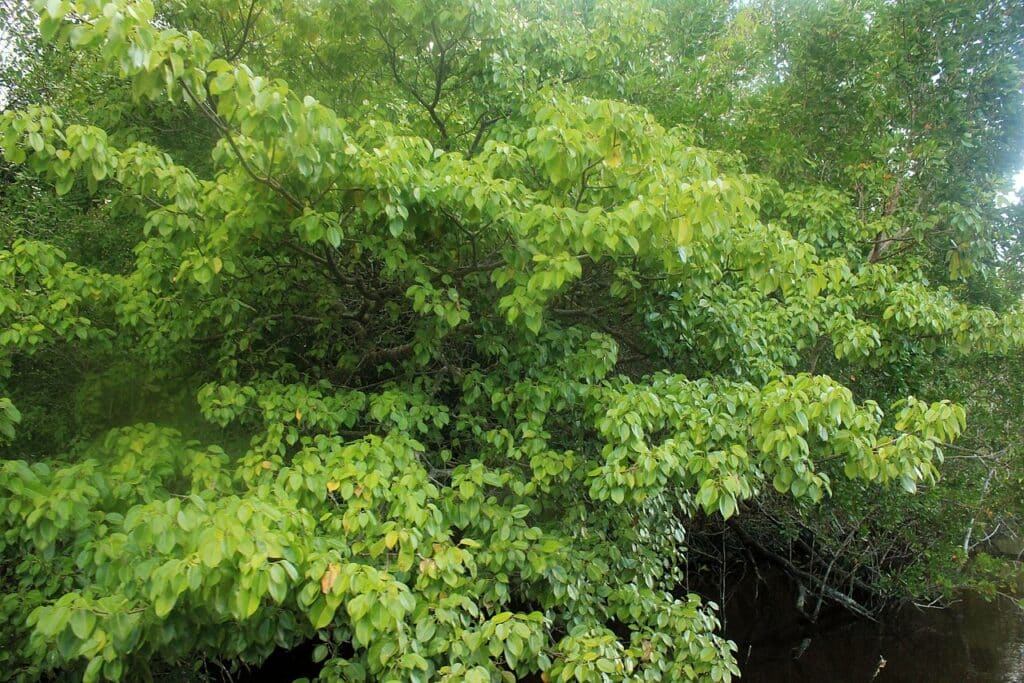
While we love all trees, some can hurt us. Arguably the most dangerous tree on Earth, the Manchineel hides its toxicity behind a deceptively ordinary appearance. Native to southern Florida, the Keys, Caribbean Islands, and Central America, the Manchineel tree grows along coastlines and swamps, where mangrove trees also grow.
In Spanish, the Manchineel is called manzanilla de la muerte, which means “little apple of death.” The name comes from its small, apple-like fruits, which are highly toxic and can be fatal if eaten.
In fact, every part of the Manchineel tree is toxic, not just its fruit. The bark and milky sap are highly acidic and poisonous, and even the smoke from burning its wood or leaves can cause blindness. Seeking shelter beneath the tree during rain is equally dangerous — the sap dissolve in water, and raindrops can carry it onto the skin, causing severe burns.
In some areas, Manchineel trees are marked with a red cross, a red ring of paint around the trunk, or with warning signs. Manchineel trees may be toxic but they serve an important role in windbreaking and protecting against coastal erosion on beaches in Central America.
If you ever spot these trees while on a coastal vacation, make sure to admire them from afar, and definitely don’t eat the fruits growing on their branches!
Saving Our Trees
Many species of trees serve different yet valuable purposes in our environment.
EARTHDAY.ORG supports all trees and we plant many different species of trees around the world with the Canopy Tree Project. As deforestation rates continue to increase, consider supporting EARTHDAY.ORG’s reforestation efforts through donating to our tre planting initiative.
If you want to learn more about why forests matter – please watch our brand new series UNDERREPORTED EARTH – “TREE TALES”– IG TRAIL.
Tracy McVeigh from The Guardian speaks with three top investigative journalists about their groundbreaking reporting: Elisangela Mendonça uncovers how the Amazon rainforest is being threatened by the collagen industry. Josephine Moulds takes us into the Congo Basin, where fossil fuel auctions are endangering one of the world’s most vital forest ecosystems. Ana Bottallo travels deep into the Amazonian mangroves to witness how local communities fought — to have their voices heard.
The episodes go live November 17/18th/19th across EARTHDAY.ORG social media on Facebook: Ep.1, Ep.2, Ep.3 and YouTube: Ep.1, Ep.2, Ep.3.
This article is available for republishing on your website, newsletter, magazine, newspaper, or blog. The accompanying imagery is cleared for use with attribution. Please ensure that the author’s name and their affiliation with EARTHDAY.ORG are credited. Kindly inform us if you republish so we can acknowledge, tag, or repost your content. You may notify us via email at [email protected] or [email protected]. Want more articles? Follow us on substack.