Conservation and Biodiversity
Colorful Ghosts Haunt Our Wetlands
February 2, 2026
The word “wetlands” usually conjures up images of water-logged marshes humming with frogs and insects, complete with patches of reeds and short, gnarled trees along the banks. Think back to your childhood; did you grow up near a pond or lake, dodge your parents’ warnings in soggy bullrush groves, catch frogs, or fish for trout and perch? Even if none of those scenarios stirred your memory, chances are you’ve seen or been near (or even in!) wetlands at some point in your life. As you mucked through those waters, eyeing black birds or turtles, did you realize just how precious those ecosystems were? Well, in celebration of World Wetlands Day, prepare to get your boots muddy!
Wetlands are water-dominated ecosystems with a wealth of diverse animal and plant life. Although they cover less than 10% of Earth’s surface, almost 40% of all plants and animals live or breed in wetlands. According to a broader definition provided by the U.N., wetlands may include all freshwater, marine, and coastal ecosystems, from lakes and rivers to coral reefs and underground aquifers to the humble marsh or swamp.
Wetland ecosystems benefit and protect animals, plants, and humans. For the 60% of humans living near large bodies of water, wetlands provide key buffering zones along the coasts to protect us from flooding and absorb storm impacts. They also act as natural water filters, improving water quality for humans and wildlife by removing pollutants, sediment, and other waste.
Unfortunately, for much of history, wetlands have been places to be avoided. Wetlands were treated as wasteland for people to drain, fill in, or dump waste into. In just the last 300 years, 87% of the world’s wetlands have disappeared, in part due to rising sea levels and human-led habitat destruction. And, as a result of climate change, remaining wetland ecosystems are grappling with harmful algae blooms.
What Are Harmful Algae Blooms?
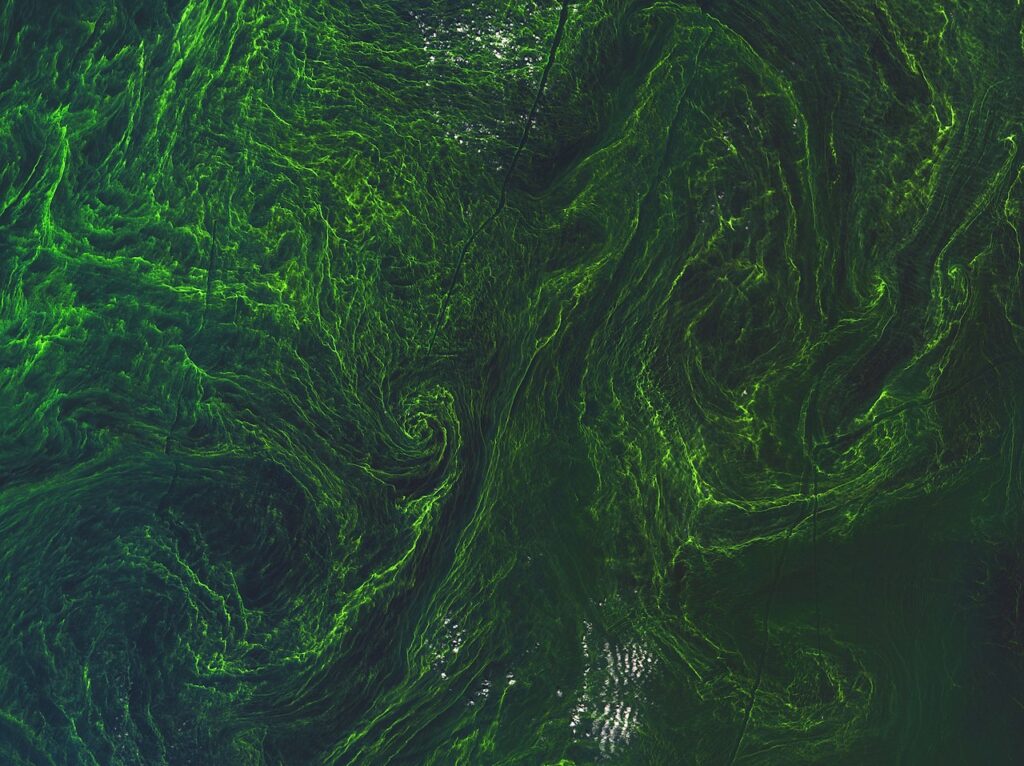
Harmful algae blooms (HABs) happen when colonies of algae expand out of control, resulting in toxic or harmful effects on surrounding wildlife and human beings. When blooms decompose, algae-eating microbes use extra oxygen while consuming them, leading to oxygen dead zones and marine animal die-offs. For instance, in 2020, masses of dead sea creatures washed up on beaches near Kamchatka. Initially believed to be the result of petroleum pollution, scientists later blamed a massive algae bloom, some several kilometers wide, off the coast.
There’s no question that the HAB problem is a major global issue, and it is growing.
Donald Anderson, Director of the US National Office for Harmful Algal Blooms
“Red Ghosts” in China
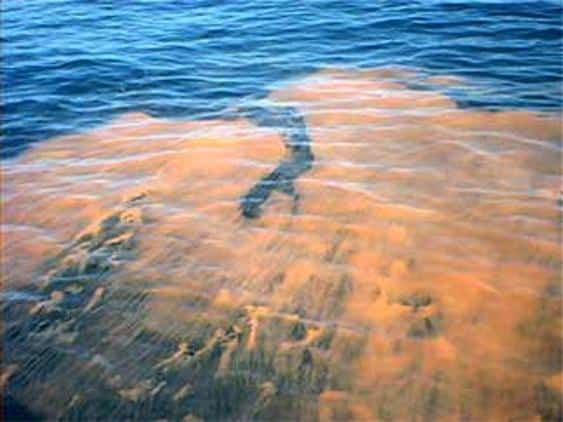
On the southern coast of China, “red tides” of the algae Phaeocystis globosa blanket beaches. Known locally as the “red ghost,” P. globosa hit hard during the summer of 2025, with local officials warning people against visiting affected areas or consuming seafood from impacted regions for fear of illness. The dense algae also threatened to clog local power plants, shutting down generators and clogging cooling pipes. For marine life, rapidly depleting oxygen levels in and around the bloom increased risks of hypoxia or oxygen deficiency in the body. This often leads to mass marine die-offs.
The first documented harmful algae bloom in China occurred in 1933. Since 1980, HABs have increased exponentially: between 2014 and 2023, China recorded an average of 50 annual red tides. Thankfully, mitigation techniques like modified clay approaches which activate clay with elements like aluminum to absorb algal cells, have been used to deal with sudden blooms. While modified clay approaches are both highly effective and environmentally friendly, they have historically been expensive to produce.
Poison in the Great Lakes
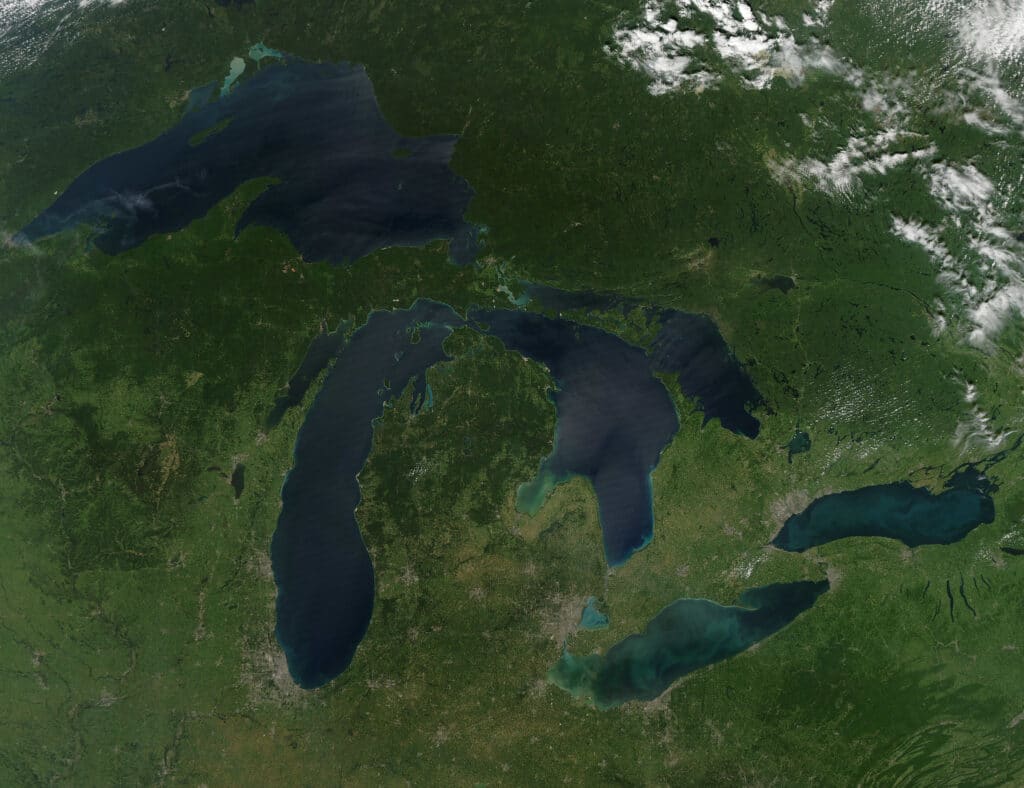
While red ghosts haunt China, blue-green ghosts plague the Great Lakes in North America. Cyanobacteria blooms are now annual occurrences around the Great Lakes, especially in Lake Erie. Its depth and geography make it particularly vulnerable to harmful algae blooms. Bloom-induced oxygen dead zones tend to remain for months on end due to Erie’s stratification, or the tendency of the water to divide into distinct layers based on varying temperature and density.
Lake Erie’s recurring blue-green ghosts threaten the health and drinking water of nearly 11 million people. Communities in the area worry about access to unpolluted drinking water, harm to the region’s tourism industry, and whether or not they’ll be able to enjoy boating and swimming on the lake each summer.
One of the biggest contributors to Lake Erie’s algae blooms is fertilizer and manure runoff pollution from local farms and industry. This boatload of nutrients feeds harmful blooms, turning them into expansive monsters that threaten the quality of life of both humans and wildlife.
If you have an agricultural system where the farmer can only survive by polluting Lake Erie, then there’s something fundamentally wrong with that system.
Dr Thomas Bridgeman, Director of the Lake Erie Center
An Algae-clogged South African Reservoir
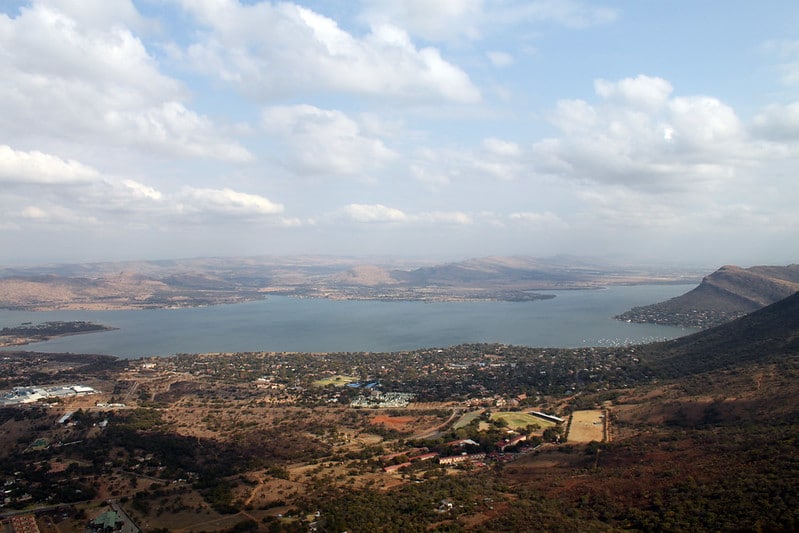
Between 2022 and 2023, NASA recorded images of harmful algae blooms at the Hartbeespoort Dam in South Africa. The reservoir is primarily used for irrigation and recreation, but swimming in HAB-infested waters may leave rashes on humans, while pets who drink the water may get sick and die. Accidentally swallowing infected water leads to a host of symptoms including stomach pain, vomiting, diarrhea, headache, muscle weakness, dizziness, and liver damage. Pets face more severe symptoms like seizures and difficulty breathing.
The marine life of Hartbeespoort Dam suffered too. In 2023, decreased levels of oxygen in the Hartbeespoort Dam due to harmful algae blooms contributed to mass fish die-offs.
Trends over time revealed key factors in algae bloom frequency and severity: algal growth was more severe near the western side of the reservoir due to golf course runoff and reduced water circulation. After high phosphorus levels in the early 1980s caused massive blooms, a bioremediation program—an environmentally friendly control system to reduce algae—was introduced to mitigate algae blooms. However, funding cuts decimated the program and algae blooms spiked again in the 2000s. Similar initiatives to control algae blooms are used around the world, from experimental seaweed biological control methods in Japan and the USA to deep-water upwelling in Norway, Chile, and Australia.
Report and Protect Your Community From Ghosts!
Our wetlands are precious and deserve our respect and protection. While wider issues stemming from anthropogenic climate change, habitat destruction, and uncaring world leaders may seem overwhelming, there are smaller steps individuals can take to help mitigate wetland damage.
Try using phosphate-free detergents, refrain from flushing medications or chemicals, ensure pet waste is cleared, and that your lawn is kept at least 3-4 inches in length to avoid excessive runoff. If you notice a suspicious algae bloom, report it to your local environmental department by calling their number.
EARTHDAY.ORG’s Canopy Project is another way to get involved. Reforestation is an excellent way to give back to nature, providing more roots and biomass to absorb excess nutrient runoff and protect our wetland ecosystems. By donating to the Canopy Project, you’re helping to plant trees and protect waterways, from Dallas, Texas to Madagascar.
This article is available for republishing on your website, newsletter, magazine, newspaper, or blog. The accompanying imagery is cleared for use with attribution. Please ensure that the author’s name and their affiliation with EARTHDAY.ORG are credited. Kindly inform us if you republish so we can acknowledge, tag, or repost your content. You may notify us via email at [email protected]. Want more articles? Follow us on substack.