
EDN Launches National School Lunch Week Campaign

Earth Day Network launched a new multi-year campaign today to raise the profile of National School Lunch Week and the need to provide K-12 students with healthy, sustainable food.

The campaign’s launch comes as millions of American children head back to school and the Healthy, Hunger-Free Kids Act goes into effect across the country.

Established by Congress in 1962, National School Lunch Week remained largely unobserved until the Obama administration – bolstered by First Lady Michelle Obama’s Let’s Move! Initiative – began making yearly proclamations in 2010 to highlight its existence. However, the opportunity to substantively implement National School Lunch Week has gone untapped.

This year, National School Lunch Week is October 15-19.

The federal government has taken the first steps by passing the Healthy, Hunger Free Kids Act and reaffirming National School Lunch Week. Now, we have a unique and significant window of opportunity to guide the Act’s implementation; to push for significantly higher standards; to educate students, parents, and school officials; and ultimately to help change the way American children eat and think about their food.

Despite increased public focus on obesity and health, children's health and nutrition in the U.S. is in a state of crisis that affects our nation's educational success, job readiness, global competitiveness, the surging cost of healthcare, and environmental sustainability.

The importance of food in schools can hardly be overstated. Yet, the food provided to schools is some of the lowest quality food in the country, both in terms of nutrition level and sustainability.

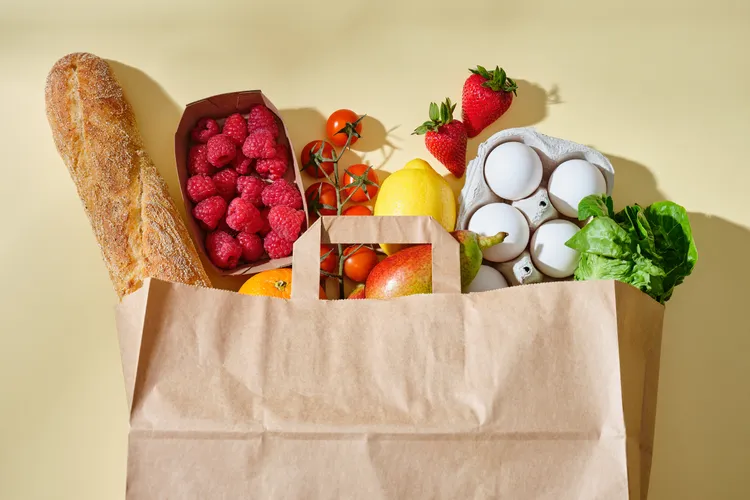
Heavily processed and treated with pesticides and preservatives, the food served in U.S. schools today is much lower in nutrients than fresh, local food, having traveled on average 3,000 miles on its journey between field and fork.  On the other hand, fresh, local food delivers more nutrients, reduces carbon emissions, connects a school to its community and benefits the local economy.

In its first year, the campaign will entail hands-on school vegetable garden and farm-to-school demonstration projects, collecting commitments from schools and parents to advocate for and serve healthy and sustainable food during National School Lunch Week and beyond, delivering healthy-foods curricula to teachers, community screenings of a documentary presenting school lunch success stories, a student poster contest, lobbying to bolster the National School Lunch Program, and more.

To learn more about the campaign and how you can get involved, go to www.earthday.org/national-school-lunch-week

Comments

jay11

Absolutely fantastic posting!

Absolutely fantastic posting! Lots of useful information and inspiration, both of which we all need!Relay appreciate your work.
Go to Deco En Bois

tiptop

The post is written in very a

The post is written in very a good manner and it contains many useful information for me.
garcinia extract

jay11

Really a great addition. I

Really a great addition. I have read this marvelous post. Thanks for sharing information about it. I really like that. Thanks so lot for your convene.
corporate photography

jay11

Really a great addition. I

Really a great addition. I have read this marvelous post. Thanks for sharing information about it. I really like that. Thanks so lot for your convene.

juliass

What do you think of the fact

What do you think of the fact that kids waste $2 billion of tax money yearly through the School Lunch Program?
Essentially this means that $2 billion worth of food that taxpayers have paid for through the National School Lunch Program is served to the students but goes uneaten and is thrown in the trash. Would you say the fault is with the schools, the students, the parents, something else? And where would the solution be?

Regards
Julia Stevenson
http://theverticaladvantagesystem.com

Shift_Ins

This is great its good to see

This is great its good to see that we are still promoting and staying strong the the values of healthy eating for our children. They will not always know what is good and bad for them and it is our responsibility to make sure our children are properly educated.

Post new comment